

Key Takeaways
- A fire at a major medical supply distribution warehouse in California destroyed more than 1 million square feet of medical supplies, halting deliveries to hospitals across California.
- The crisis exposed three structural supply chain vulnerabilities: single-source distributor dependency, just-in-time inventory with little real buffer, and no early warning system.
- Health systems with surge PAR tiers and real-time analytics visibility were better positioned to respond quickly and brief clinical leadership with a clear picture.
- Supply chain analytics can flag vendor fill-rate drift and back-order risk weeks in advance, giving teams time to source substitutes before a shortage reaches the point of care.
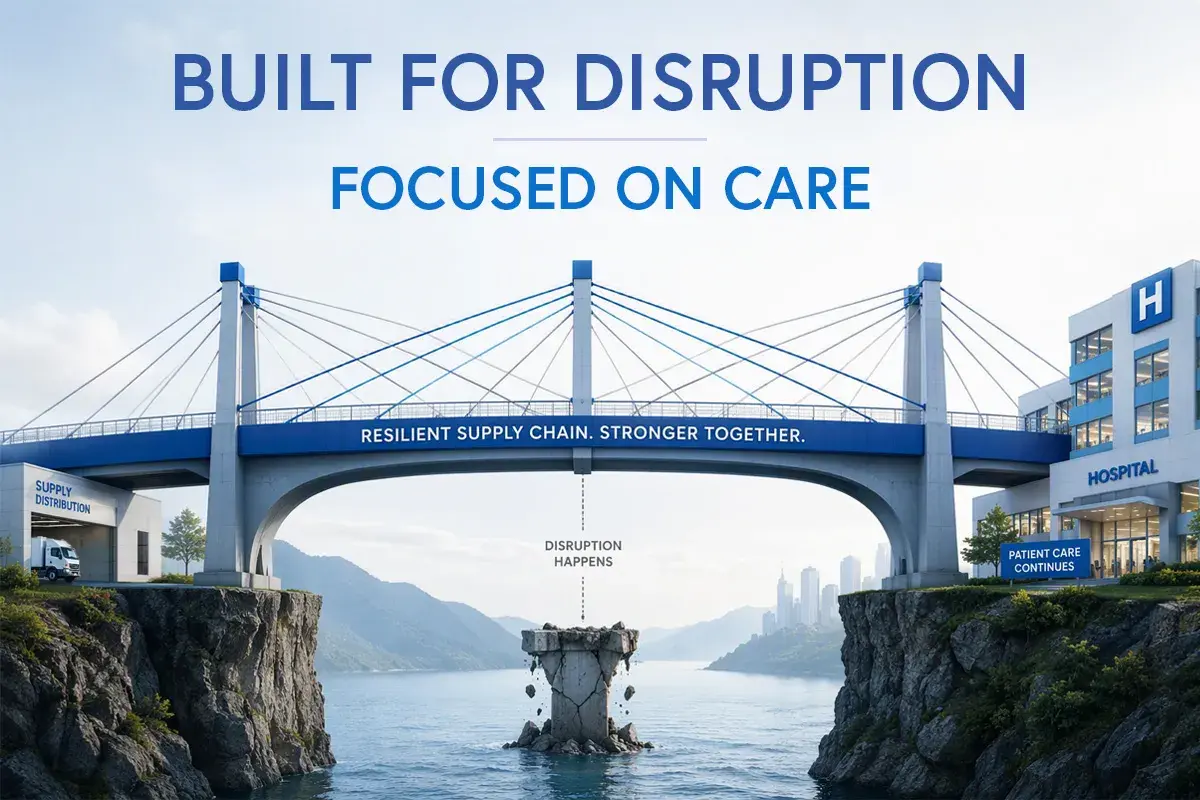
- Resilient supply chains are designed for disruption before it happens, not built in response to a crisis that is already underway.
On June 12, 2026, a fire broke out at a major medical supply distribution warehouse in California. By the time crews arrived, a 1-million-square-foot facility was engulfed. Bandages, wound care products, detergents, and other daily-use supplies were gone. For hospitals across California that rely on a single major distributor for regular replenishment, the alerts came fast, and the questions came faster: what do we have on hand, and how long will it last?
"A whole entire 1 million square foot warehouse up in flames? It is alarming to see." — Jag Batth, COO, Kaweah Health
The immediate risk, as hospitals reported, was a buffer of roughly one to two weeks of critical supplies. The distributor moved quickly to reroute deliveries from other facilities. But the fire was a single event. And a single event nearly paralyzed care delivery for dozens of health systems across the state.
That is worth sitting with.
The Three Vulnerabilities the Fire Made Visible
This event did not create a crisis out of nowhere. It revealed one that was already built into how most hospital supply chains operate.
-
The first vulnerability is a single-source dependency. Most health systems rely heavily on a small number of large distributors for the bulk of their everyday supplies. When a regional distribution hub is compromised, hospitals that depend on it have no ready fallback.
-
The second vulnerability is just-in-time inventory. Lean procurement practices help hospitals reduce carrying costs and storage footprint. The tradeoff is a thin buffer. When the supply line is severed, a health system with one to two weeks of stock has very little time to source alternatives before operational pressure becomes patient care risk.
-
The third vulnerability is the absence of an early warning. Most hospitals learned about the disruption when deliveries stopped. There was no signal weeks earlier that a key distribution node was under stress, nor was there time to pre-position inventory or to activate secondary suppliers in an organized way.

What Resilient Health Systems Do Differently
The health systems best positioned to absorb disruptions like this are not the ones that react fastest. They are the ones who built the capacity to respond before the crisis arrived.
Real-Time Analytics Visibility
Knowing what is on the shelf is not enough. Resilient health systems know, in real time, how their current inventory relates to consumption trends and vendor fill rates. BlueBin's BlueQ Analytics platform monitors vendor performance indicators continuously and can flag back-order risk weeks before a gap reaches the point of care. That window is enough to contact secondary suppliers, adjust PAR levels, and avoid panic purchasing that drives up costs during a shortage.
Pre-Configured Surge PAR Tiers
Surge PAR configurations are pre-defined inventory thresholds built for disruption scenarios: pandemics, natural disasters, and distributor failures. Health systems that have built these tiers can activate a response protocol immediately. Instead of building a spreadsheet the same morning, supply chain leaders can brief the hospital incident command system with a clear status picture within the hour while simultaneously managing communications with clinical leadership and hospital administration.
Infrastructure That Does Not Depend on a Single Supply Pathway
BlueBin's two-bin Kanban system builds a buffer into the supply room by design. When the active bin runs low, the second bin activates, and a replenishment order is automatically triggered. This system operates without real-time electronic connectivity, which matters when external networks are disrupted. Queued scans sync to the ERP automatically once connectivity is restored, preserving accurate consumption records without manual recovery.

Building Resilience Before the Next Crisis
This will not be the last disruption healthcare supply chains face. The combination of concentrated distributor networks, just-in-time inventory models, and limited early-warning infrastructure creates a system that performs well under normal conditions and struggles under abnormal ones.
Building genuine supply chain resilience is not a reactive exercise. It is an investment made before the crisis arrives in the analytics, processes, and physical infrastructure that allow a health system to absorb a shock without disrupting care.
If your organization wants to assess its distributor dependency and resilience posture, we are glad to help.
Frequently Asked Questions
