

Key Takeaways
- Healthcare supply chains contribute significantly to environmental impact; the $25.7B in annual waste represents unnecessary manufacturing, transportation, storage, and disposal of supplies that never reach patients.
- Average product expiration rates of 8–10% generate substantial medical waste; best-in-class supply chain management reduces this to under 1%.
- Supply chain waste reduction creates quantifiable, auditable ESG metrics that support green bond eligibility and institutional investor sustainability expectations.
- Documented operational improvements in supply chain—reduced expiration, less excess inventory, fewer unnecessary orders—directly advance both environmental goals and financial objectives.
Environmental, Social, and Governance commitments are no longer optional for healthcare organizations. With healthcare contributing significantly to environmental impact through medical waste, energy consumption, and carbon emissions, supply chain operations have become a critical focus for ESG initiatives. For healthcare systems pursuing green bonds or meeting investor expectations for sustainability performance, documented waste reduction in supply chain operations provides measurable impact that supports both environmental goals and financial objectives.

The Healthcare Supply Chain Sustainability Challenge
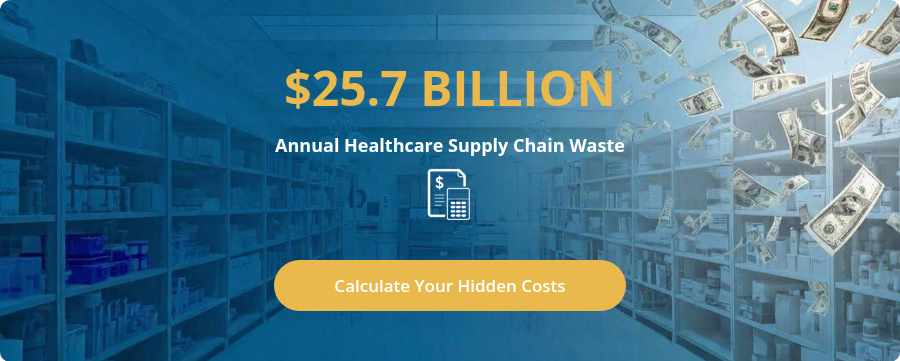
The $25.7 Billion Waste Problem
Healthcare supply chains in the United States waste $25.7 billion annually through inefficient processes, expired products, and excess inventory. This staggering figure represents more than just financial loss—it translates directly into environmental impact through unnecessary production, shipping, storage, and disposal of medical supplies. Every expired product that enters the waste stream required energy to manufacture, transport, and store, only to become medical waste without ever serving its intended purpose.
The typical healthcare organization experiences 8-10% product expiration rates, meaning nearly one in ten items purchased eventually becomes waste without providing patient care value. This waste includes significant volumes of clinical plastics, pharmaceutical products, and other materials with substantial environmental footprints. For organizations committed to ESG goals, addressing this waste represents one of the most impactful opportunities for measurable environmental improvement.
Environmental Impact Beyond Financial Cost
Supply chain waste creates environmental challenges extending far beyond purchase costs. Manufacturing medical supplies requires significant energy inputs, raw materials extraction, and often complex chemical processes. Transportation moves products across continents, generating substantial carbon emissions. Storage facilities consume energy for climate control and lighting. When products expire without use, all these environmental impacts occur for zero patient care benefit.
Medical waste disposal itself presents environmental challenges. Incineration contributes to air pollution and greenhouse gas emissions. Landfilling takes up scarce space and can create long-term environmental contamination. Even recycling programs for medical plastics require additional energy and processing. Reducing the volume of waste entering these disposal streams provides direct environmental benefits while also reducing costs.
Investor and Stakeholder Expectations
Healthcare organizations face increasing pressure from multiple stakeholders to demonstrate environmental responsibility. Institutional investors increasingly incorporate ESG criteria into investment decisions, rewarding organizations with strong sustainability performance and penalizing those falling behind. Bond markets now feature green bonds specifically tied to environmental performance metrics, offering potentially favorable financing terms for organizations that can document meaningful environmental improvements.
Communities expect local healthcare institutions to model environmental stewardship. Accreditation bodies are incorporating sustainability considerations into evaluation criteria. Even patients increasingly consider environmental practices when choosing healthcare providers. Healthcare organizations that can document quantifiable environmental improvements gain advantages with all these stakeholder groups while also reducing operational costs.

Supply Chain Waste Reduction: Measurable Environmental Impact
Reducing Expirations from 8-10% to Less Than 1%
Advanced supply chain management systems achieve expiration rates below 1%, compared to the 8-10% industry norm. This dramatic reduction represents a fundamental change in how supplies flow through healthcare facilities. Rather than buying in bulk and hoping to use items before expiration, modern systems use data analytics to optimize PAR levels based on actual usage patterns, ensuring supplies turn over before approaching expiration dates.
FIFO and FEFO rotation protocols systematically ensure older items are used first, reducing the risk of expired or recalled products reaching patients. This approach serves both patient safety and environmental goals simultaneously. Visual management systems make it immediately obvious when items are approaching expiration, enabling proactive use or redistribution rather than discovery after expiration has occurred.
The environmental impact of this reduction is substantial. For a large health system, reducing expirations from 10% to 1% prevents thousands of pounds of medical waste annually. This waste reduction directly supports green bond criteria and ESG reporting requirements by providing quantifiable, documented environmental improvement that can be tracked and verified over time.
20% Reduction in Overall Waste Weight and Energy Use
Beyond expiration reduction, optimized supply chain operations achieve greater than 20% reduction in total waste weight and energy consumption. This comprehensive improvement comes from multiple sources. Right-sized PAR levels eliminate excess inventory that creates waste through damage, obsolescence, and storage inefficiency. Perpetual inventory optimization ensures organizations stock appropriate quantities rather than maintaining excessive safety stock that eventually becomes waste.
Energy savings result from reduced storage requirements and more efficient warehouse operations. Smaller inventory footprints require less climate-controlled space, reducing HVAC energy consumption. More efficient picking and replenishment processes reduce labor hours and associated energy use. Fewer rush orders and emergency deliveries eliminate the extra transportation and packaging associated with expedited shipping.
These improvements directly address the healthcare industry's $25.7 billion annual supply waste problem. While individual organizations cannot solve the entire industry challenge, each health system that implements optimized supply chain operations makes measurable progress. For ESG reporting and green bond applications, this documented waste reduction provides concrete evidence of environmental commitment and performance.
Reduction in Paper, Linen, and Packaging Waste
Right-sized PAR levels and improved inventory visibility reduce waste in surprising categories. Paper and linen usage decreases when supplies are properly organized and visible. Organizations discover they no longer need excessive paper documentation to track inventory when digital systems provide real-time visibility. Linen waste decreases when PAR optimization ensures appropriate quantities are available without overstocking.
Packaging waste reduction occurs through more efficient ordering patterns. Rather than numerous small orders requiring individual packaging, optimized systems consolidate orders more effectively. Direct relationships with manufacturers can sometimes enable returnable packaging programs that eliminate single-use shipping materials. These improvements may seem minor individually, but collectively contribute significantly to overall waste reduction.
ESG supply chain metrics dashboard comparing healthcare industry benchmarks to BlueBin performance outcomes
ESG performance
Healthcare supply chain impact metrics
Annual U.S. supply chain waste
$25.7B
Product expiration rate
Nearly 1 in 10 items purchased becomes waste at industry average
Total waste weight
>20%
documented reduction
Includes clinical plastics, linen, and packaging waste
Energy consumption
>20%
documented reduction
Reduced HVAC, warehouse, and transportation energy
Carbon impact
Less incineration from expired product waste
Fewer emergency deliveries and expedited shipments
Reduced landfill from optimized inventory levels
Less manufacturing demand for wasted supply
Quantifiable, auditable, and green bond eligible

Green Bond Eligibility and ESG Reporting
Understanding Green Bond Requirements
Green bonds provide healthcare organizations with financing specifically tied to environmental projects and improvements. To qualify for green bond designation, organizations must demonstrate that proceeds will fund projects with measurable environmental benefits. Supply chain transformation projects that document significant waste reduction and environmental impact improvement can qualify as green bond eligible projects.
Key requirements for green bond eligibility include clear environmental objectives, documented baseline measurements, quantifiable impact metrics, third-party verification capabilities, and ongoing reporting mechanisms. Supply chain waste reduction projects meet all these requirements when implemented with proper measurement and documentation systems.
Documented Waste Reduction as Green Bond Support
Supply chain analytics platforms provide the documentation infrastructure needed for green bond applications and ongoing compliance. Real-time dashboards track expiration rates, inventory levels, and waste metrics continuously. Historical data demonstrates baseline performance and ongoing improvements. Automated reporting capabilities generate the documentation required for bond compliance and environmental impact verification.
Organizations can establish baseline expiration rates, excess inventory levels, and waste metrics before implementing supply chain improvements, then demonstrate measurable reductions after implementation. This documented improvement provides the quantifiable environmental impact that green bond investors and verification bodies require. The ability to track these metrics over time ensures ongoing compliance and demonstrates sustained environmental performance.
ESG Reporting Requirements
Environmental, Social, and Governance reporting increasingly requires specific metrics around waste reduction, energy efficiency, and sustainability performance. Healthcare organizations must provide quantifiable data demonstrating progress on environmental goals. Supply chain operations provide some of the most measurable opportunities for environmental improvement documentation.
ESG reports benefit from specific metrics that supply chain analytics readily provide: percentage reduction in product expirations, tons of medical waste avoided, reduction in excess inventory value, square footage of storage space eliminated, energy savings from reduced climate control requirements, and carbon emissions avoided through reduced transportation and disposal. These concrete metrics strengthen ESG reports and demonstrate environmental commitment to investors, regulators, and stakeholders.
Green bond qualification path: four steps from baseline measurement to green bond eligibility
- Current expiration rates by category
- Excess inventory value and volume
- Waste disposal volumes and costs
- Energy use in storage facilities
- Ordering and delivery patterns
- Right-sized PAR levels by usage data
- FIFO/FEFO rotation protocols
- Visual management systems
- Analytics platform deployment
- Daily management system integration
- Real-time expiration and waste dashboards
- Historical trending against baseline
- Automated compliance reporting
- Third-party verification support
- Quantified environmental impact data
- Clear environmental objectives
- Documented baseline measurements
- Quantifiable impact metrics
- Third-party verification capability
- Ongoing reporting mechanisms

The Business Case: Environmental Performance and Financial Returns
Complementary Rather Than Competing Goals
One of the most compelling aspects of supply chain waste reduction is the alignment between environmental and financial objectives. Unlike some environmental initiatives that require trading financial performance for sustainability gains, supply chain optimization improves both simultaneously. Reducing expirations from 10% to 1% eliminates waste while also preventing purchase costs for supplies that never serve patients.
Organizations typically achieve 7% supply expense reduction through optimized supply chain operations, directly improving financial performance while also generating environmental benefits. This financial return helps fund additional sustainability initiatives and demonstrates that environmental responsibility can enhance rather than constrain financial performance. For CFOs evaluating ESG investments, supply chain optimization, through hospital inventory management solutions, provides rare opportunities for positive financial returns alongside environmental improvements.
5-7x ROI with Environmental Benefits
BlueBin customers implementing comprehensive supply chain transformation typically see a 5-7x return on investment. This substantial financial return occurs while simultaneously achieving dramatic environmental improvements. Organizations reduce waste, lower energy consumption, decrease packaging requirements, and eliminate unnecessary transportation, all while generating significant cost savings.
This financial performance enables organizations to reinvest in additional sustainability initiatives. The savings from supply chain optimization can fund renewable energy projects, facility efficiency upgrades, or other environmental improvements. This creates a virtuous cycle where environmental initiatives generate returns that fund further environmental progress.
Waste reduction impact: before and after comparison of healthcare supply chain expiration rates and environmental outcomes
without ever reaching a patient
- Expired product enters waste stream — incinerated or landfilled
- Manufacturing, shipping, and storage energy spent for zero patient benefit
- Clinical plastics, pharmaceuticals, and packaging added to disposal stream
- Excess inventory requires expanded climate-controlled storage
- Emergency and rush orders drive extra transportation emissions
data-driven PAR optimization
- Thousands of pounds of medical waste avoided annually per health system
- Greater than 20% reduction in total waste weight and energy consumption
- FIFO/FEFO rotation prevents expiration — supplies reach patients, not the waste stream
- Right-sized inventory reduces storage footprint and HVAC energy demand
- Optimized ordering eliminates emergency shipments and excess packaging waste
Competitive Advantages of ESG Leadership
Healthcare organizations demonstrating strong ESG performance gain advantages in capital markets, community relationships, and talent recruitment. Green bond financing can provide favorable interest rates compared to conventional bonds. Investors increasingly reward organizations with strong sustainability records through higher valuations and lower capital costs.
Communities view environmentally responsible healthcare systems as better community partners and employers. This reputation advantage supports patient acquisition, physician recruitment, and community support for facility expansions or service line additions. Younger healthcare professionals increasingly consider employer sustainability practices in career decisions, giving ESG leaders advantages in the competitive talent market.

Implementation: Building Sustainability into Supply Chain Operations
Baseline Measurement Requirements
Effective ESG programs require establishing clear baseline measurements before implementing improvements. Organizations should document current expiration rates across all product categories, measure total inventory value and excess stock levels, track energy consumption in storage and warehouse facilities, quantify waste disposal volumes and costs, and establish current ordering and delivery patterns.
These baseline measurements enable demonstrating meaningful improvement after supply chain transformation. Without clear baselines, organizations cannot credibly claim environmental progress. The data collection process itself often reveals improvement opportunities that weren't previously visible, making baseline measurement a valuable exercise beyond just establishing starting points for metrics.
Analytics Platform Requirements
Sustaining ESG performance requires analytics platforms that continuously track environmental metrics alongside operational and financial performance. Real-time dashboards should provide visibility into expiration trends, excess inventory, slow-moving items, and waste generation. Automated reporting capabilities must generate the documentation required for green bond compliance and ESG reporting.
The analytics platform should integrate with existing ERP systems to ensure data accuracy and minimize manual data entry. Historical trending capabilities enable demonstrating sustained performance over time. Drill-down functionality allows identifying specific areas or product categories requiring attention. These capabilities transform supply chain analytics from operational tools into strategic ESG performance management systems.
Continuous Improvement Culture
Sustainable ESG performance requires embedding environmental considerations into standard supply chain processes. Daily management systems should include environmental metrics alongside operational and financial measures. Regular gemba walks should assess waste generation and identify improvement opportunities. Staff training should emphasize both environmental and operational objectives.
This cultural integration ensures environmental performance becomes an ongoing priority rather than a one-time initiative. Organizations that achieve initial waste reduction but fail to maintain focus typically see performance gradually erode. Those that embed environmental metrics into standard work and continuous improvement processes sustain and build upon initial gains over time.

Beyond Compliance: Strategic Environmental Leadership
From Reporting Requirement to Strategic Advantage
Leading healthcare organizations view ESG not as compliance burden but as strategic opportunity. Strong environmental performance enhances reputation, reduces costs, attracts capital, improves employee engagement, and positions organizations as community leaders. Supply chain waste reduction provides an accessible entry point for organizations building comprehensive sustainability strategies.
Organizations should communicate environmental achievements to stakeholders through annual sustainability reports, community engagement programs, and internal communications. Documented waste reduction and environmental improvements differentiate healthcare systems in competitive markets. This transparency builds trust with communities and demonstrates organizational values through measurable actions.
Influencing Industry Standards
Healthcare organizations achieving significant waste reduction can influence industry practices and standards. Sharing methodologies and results through industry conferences, publications, and collaboration encourages broader adoption of sustainable supply chain practices. As more organizations demonstrate that environmental performance and financial returns align, industry norms will shift toward sustainability.
This leadership role benefits not just individual organizations but the entire healthcare industry. As hospitals collectively reduce the $25.7 billion annual supply waste, the cumulative environmental impact becomes substantial. Healthcare systems have both opportunity and responsibility to lead by example in demonstrating that large, complex organizations can achieve meaningful environmental improvements while maintaining financial health.
Dual impact visual: environmental benefits and financial benefits of healthcare supply chain transformation shown side by side

Conclusion: Environmental Responsibility as Competitive Advantage
Environmental, Social, and Governance commitments have evolved from optional corporate initiatives to strategic imperatives for healthcare organizations. Supply chain waste reduction provides an accessible, measurable pathway to significant environmental improvement while simultaneously generating substantial financial returns. Organizations that reduce expirations from 8-10% to below 1%, achieve greater than 20% waste reduction, and optimize inventory management demonstrate environmental leadership while improving operational performance.
Green bond eligibility and strong ESG reporting require documented environmental improvements with robust measurement systems. Supply chain transformation projects provide the quantifiable metrics and verification capabilities that green bond investors and ESG stakeholders demand. The documented waste reduction supports sustainability goals while generating the returns that make ongoing environmental investments sustainable.
Healthcare organizations committed to environmental responsibility should prioritize supply chain optimization as a strategic initiative. The alignment between environmental performance, financial returns, operational improvements, and stakeholder expectations creates rare opportunities where doing good and doing well converge. As the healthcare industry works to reduce its $25.7 billion annual supply waste, each organization that implements sustainable supply chain practices contributes to both institutional success and broader environmental progress.

Frequently Asked Questions
