

Key Takeaways
- COVID-19 exposed a fundamental visibility gap: most hospitals couldn't answer basic questions like "Where are our N95 masks?" or "Which departments are critically short right now?"
- The healthcare industry's $25.7 billion annual supply waste problem became significantly worse during the pandemic due to an inability to dynamically adjust PAR levels.
- Organizations dependent on a single distributor or lacking direct-to-manufacturer relationships were most vulnerable when supply networks broke down.
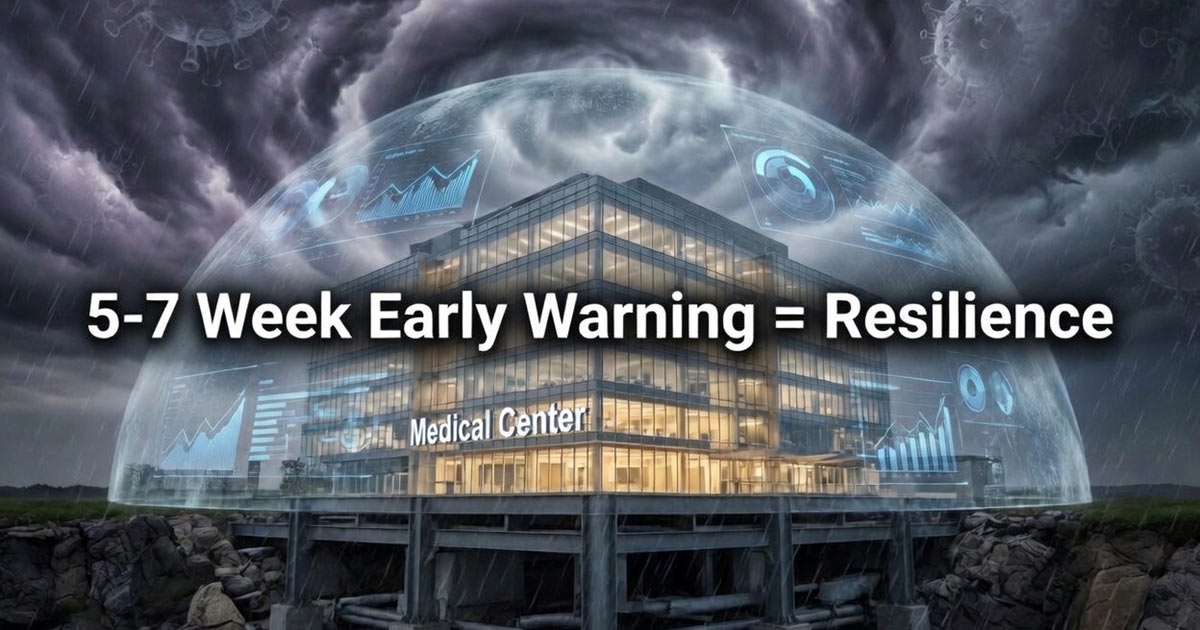
- Mayo Clinic and Cleveland Clinic demonstrated that resilience requires three things: real-time system-wide visibility, predictive capabilities that flag disruptions 5–7 weeks in advance, and flexible systems that adapt to rapidly changing conditions.
- Buffer logic and surge dashboards — not stockpiling — are the modern answer to crisis preparedness, using data analytics to maintain strategic reserves without creating waste.
Since this post was first published, the Iran conflict has introduced new supply chain pressure across the healthcare industry. Global helium supply has been significantly disrupted due to damage to production facilities and shipping disruptions, raising concerns for hospitals that depend on the gas for MRI operations and certain surgical procedures. Medical glove prices have increased by as much as 40% due to rising raw material costs, with analysts warning that sustained disruption could lead to shortages in the months ahead.
Supply chain leaders across the country are managing these disruptions in real time right now. The resilience framework in this article addresses exactly the structural vulnerabilities they are navigating.
The COVID-19 pandemic exposed critical vulnerabilities in healthcare supply chains that many organizations are still working to address. When hospitals faced unprecedented demand for PPE, ventilators, and critical supplies, traditional supply chain systems struggled to provide the visibility and flexibility needed to respond effectively. Today's healthcare leaders are implementing lessons learned from institutions like Mayo Clinic and Cleveland Clinic to build supply chains that can withstand future disruptions while maintaining operational excellence during normal operations.
The COVID-19 Wake-Up Call: What We Learned
Visibility Gaps Exposed
During the pandemic's early months, many healthcare systems discovered they lacked basic visibility into their supply inventories. Organizations couldn't answer fundamental questions: Where are our N95 masks located across our system? How many ventilators do we actually have? Which departments are experiencing critical shortages right now?
Without real-time data and system-wide visibility, supply chain leaders were forced to make critical decisions based on incomplete information. Manual counting processes that took days or weeks meant that by the time inventory data was available, the situation had already changed dramatically. This lack of visibility contributed to the industry's $25.7 billion annual supply waste problem, which became even more costly during crisis conditions.
Demand Forecasting Failures
Traditional supply chain systems rely on historical usage patterns to forecast future needs. When COVID-19 hit, these historical patterns became irrelevant overnight. Organizations that depended on standard forecasting models found themselves unable to predict which supplies would face surging demand and which would sit unused as elective procedures were postponed.
The inability to quickly adjust PAR levels and anticipate demand fluctuations led to simultaneous problems: stock-outs of critical items and excess inventory of others. Healthcare organizations needed dynamic systems that could adapt to rapidly changing conditions rather than relying on static historical data.
Supplier Disruption Impact
The pandemic revealed how dependent healthcare supply chains were on complex, fragile distribution networks. When manufacturers shut down, international shipping was disrupted, and distributors struggled to meet demand, organizations discovered they had little advance warning of impending shortages. Without predictive capabilities providing 5-7 weeks advance notice of potential disruptions, many facilities were caught off-guard when critical supplies became unavailable.
Healthcare systems that relied exclusively on single distributors or lacked direct-to-manufacturer relationships found themselves particularly vulnerable. The pandemic demonstrated the need for diversified supply relationships and predictive intelligence that could warn of supplier shutdowns or back-orders well before they impacted patient care.

Resilience Best Practices from Leading Health Systems
Mayo Clinic and Cleveland Clinic Approach
Leading health systems like Mayo Clinic and Cleveland Clinic recognized that resilience requires more than just stockpiling supplies. These organizations pioneered approaches that combine predictive intelligence, flexible capacity, and system-wide visibility. Their work inspired the development of buffer logic and surge dashboard capabilities that help healthcare organizations prepare for future disruptions.
These institutions demonstrated that resilient supply chains need three critical elements: real-time visibility across all locations, predictive capabilities to anticipate disruptions before they occur, and flexible systems that can rapidly adjust to changing conditions. Their pandemic response showed how data-driven decision-making and advanced analytics could maintain supply availability even during unprecedented demand surges.
Buffer Logic and Surge Capacity Planning
Modern supply chain resilience incorporates buffer logic that maintains strategic reserves without creating excessive waste. This approach differs fundamentally from traditional stockpiling by using data analytics to determine optimal buffer levels for critical items. Surge dashboards provide real-time visibility into buffer stock levels, consumption rates, and projected days-on-hand, enabling proactive decision-making during crisis situations.
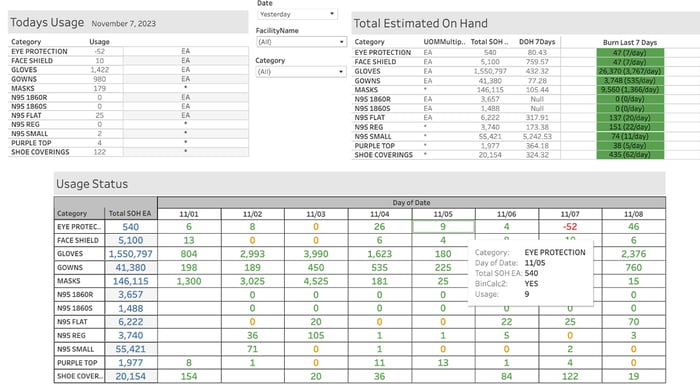
COVID-19 custom dashboards now track critical supplies across multiple dimensions: what has been ordered historically, what is currently on order, where critical supplies are located throughout the system, volume trends at system, hospital, department, and item levels, high-use areas, and current stock-out locations. This comprehensive visibility enables organizations to identify and address supply gaps before they impact patient care.

Predictive Intelligence and Early Warning Systems
Perhaps the most significant resilience innovation is predictive analytics that provides 5-7 weeks advance warning of potential supply disruptions. Machine learning algorithms analyze supplier performance, manufacturing patterns, distribution networks, and market conditions to identify looming back-orders or supplier shutdowns long before they impact operations.
This extended warning period transforms supply chain management from reactive crisis response to proactive risk mitigation. Organizations can secure alternative suppliers, adjust consumption patterns, or implement conservation measures weeks before a shortage would otherwise occur. Real-time alerts enable supply chain teams to act decisively when they have the most options available, rather than scrambling for solutions during acute shortages.
Technology for Resilience: Balancing Sophistication with Reliability
Low-Tech, High-Reliability Architecture
An often-overlooked lesson from COVID-19 is the value of low-tech, high-reliability systems. During the pandemic, many hospitals experienced network outages, power disruptions, and IT system failures that rendered sophisticated technology solutions temporarily useless. Organizations that depended on systems requiring constant network connectivity, power, and complex technology infrastructure found themselves unable to manage basic supply operations during infrastructure failures.
Resilient supply chains incorporate visual management systems that continue functioning even when technology fails. Two-bin Kanban methodology, for example, provides visual indicators that enable basic supply replenishment operations during network or power outages. This approach ensures continuity of critical supply chain functions regardless of infrastructure status, while sophisticated analytics provide intelligence and optimization when technology is available.
Direct-to-Manufacturer Relationships
The pandemic revealed vulnerabilities in exclusive distributor relationships. Organizations that maintained direct connections with manufacturers had additional options when primary distribution channels were disrupted. Direct-to-manufacturer replenishment capabilities provide resilience against distributor disruptions while potentially reducing costs through more efficient supply chains.
Building these relationships requires systems that can integrate with multiple suppliers and handle varying ordering processes, delivery schedules, and communication protocols. The investment in this flexibility pays dividends during disruptions when alternative supply sources become critical to maintaining operations.
Emergency Response Capabilities
Resilient supply chains incorporate specific capabilities designed for crisis response. Emergency-buy cost shields protect budgets during supply shortages when premium pricing becomes unavoidable. Surge PAR capabilities enable rapid adjustment of inventory levels across the system to match changing demand patterns. These features, dormant during normal operations, become essential during crisis situations.
The key is building these capabilities before they're needed. Organizations that attempted to implement emergency response features during the pandemic crisis found it extremely difficult. Those that had already incorporated buffer logic, surge dashboards, and flexible PAR adjustment capabilities into their standard operations were able to scale their response quickly and effectively.
Building Resilience While Maintaining Operational Excellence
The Balance Between Preparedness and Efficiency
One challenge in building resilient supply chains is balancing disaster preparedness with day-to-day operational efficiency. Excessive stockpiling ties up capital, increases expiration waste, and creates storage challenges. Yet inadequate reserves leave organizations vulnerable to disruptions. The solution lies in data-driven approaches that optimize buffer levels based on actual usage patterns, supplier reliability, and risk assessments.
Modern supply chain systems can maintain both efficiency and resilience simultaneously. By reducing expirations from the 8-10% industry norm to less than 1%, organizations dramatically decrease waste while maintaining adequate stock levels. Predictive analytics enable smaller working inventories by providing advance warning of potential shortages, reducing the need for excessive safety stock while actually improving supply availability.
Compliance and Accreditation During Crises
DNV and The Joint Commission continue requiring compliance with supply chain standards even during crisis situations. Organizations that built resilience on a foundation of standard work processes found accreditation much more manageable during COVID-19. When supply chain operations follow documented, standardized procedures, temporary staff can be onboarded quickly and auditors can verify compliance even when conditions are chaotic.
This approach contrasts sharply with organizations that suspended standard procedures during the crisis and then struggled to re-establish them afterward. Supply chains built on standard work and continuous improvement methodologies proved more resilient because they could adapt without abandoning the fundamental processes that ensure quality and compliance.
Sustainability in Crisis Response
Resilient supply chains must also maintain environmental responsibility during crises. The pandemic saw dramatic increases in single-use plastics and medical waste, creating sustainability challenges that persist today. Organizations that maintained focus on waste reduction even during crisis periods were able to limit environmental impact while preparing for future disasters.
Systems that achieve greater than 20% reduction in waste weight and energy use position organizations to meet both resilience and sustainability goals. Documented waste reduction supports green bond eligibility and ESG reporting requirements while also providing cost savings that can fund resilience investments. The pandemic demonstrated that environmental sustainability and operational resilience are complementary rather than competing objectives.


The Future of Healthcare Supply Chain Resilience
Ongoing Threats and Preparation
COVID-19 was not an isolated event, and 2026 is making that clear. The ongoing Iran conflict has already disrupted global helium supply, affecting the gas that hospitals depend on for MRI operations and certain surgical procedures. At the same time, raw material cost increases have driven glove prices up by as much as 40%, with allocation pressures building from manufacturers. Supply chain leaders at hospitals nationwide are actively managing these disruptions right now, adjusting procurement strategies and stress-testing supplier relationships under real conditions.
Climate change continues to increase the frequency of natural disasters that disrupt distribution networks. Cybersecurity threats target healthcare supply chain systems with growing sophistication. Future pandemics remain a real possibility. What all of these threats have in common is a shared structural vulnerability: supply chains built for efficiency under stable conditions, without the flexibility to absorb sudden disruption.
Organizations that prepare solely for a repeat of COVID-19 will be caught unprepared by the next crisis, regardless of its cause. The capabilities that helped leading health systems navigate a pandemic are the same ones supply chain teams need to navigate geopolitical disruption, natural disasters, and technology outages. Build the system once, and let it absorb whatever comes.
This requires supply chain systems with inherent flexibility and adaptability. Rather than creating specific contingency plans for each possible disruption, resilient organizations build capabilities that enable rapid response to any crisis: real-time visibility to quickly assess impacts, predictive intelligence to anticipate cascading effects, flexible sourcing to work around disruptions, and standard processes that can scale to crisis conditions.
For a closer look at how the Iran conflict is affecting hospital supply chains right now, including the helium shortage and glove price increases supply chain leaders are managing today, see hospital supply chain disruption in 2026.
Investment Priorities for Resilience
Healthcare organizations evaluating supply chain investments should prioritize resilience alongside efficiency and cost reduction. The most valuable investments provide benefits during both normal operations and crisis situations. Predictive analytics that optimize inventory levels daily also provide early warning of disruptions. Visual management systems that improve efficiency also continue functioning during infrastructure failures. Standard work processes that reduce errors also enable rapid staff onboarding during emergencies.
Organizations should be wary of investments that sacrifice long-term resilience for short-term savings. Exclusive single-source contracts may provide favorable pricing but create vulnerability. Minimal inventory strategies that eliminate all safety stock may reduce carrying costs but leave no buffer for disruptions. Technology solutions that require perfect infrastructure may optimize operations but fail during crises. The pandemic demonstrated the cost of these vulnerabilities exceeds any efficiency gains.
Learning Organization Mentality
Perhaps the most important resilience capability is organizational learning. Supply chains must capture lessons from each disruption and incorporate them into improved processes and capabilities. Organizations that treated COVID-19 as a unique emergency to be survived will be unprepared for future crises. Those that systematically evaluated their response, identified gaps, and implemented improvements will be significantly more resilient.
This learning organization approach requires data systems that document performance during crises, leadership commitment to honest assessment, and processes for implementing improvements. Regular disaster drills that test supply chain response capabilities help identify weaknesses before actual emergencies occur. Continuous improvement methodologies ensure that lessons learned translate into lasting changes rather than temporary fixes.

Conclusion: Resilience as Strategic Advantage
The COVID-19 pandemic transformed supply chain resilience from a theoretical concern into an urgent operational requirement. Healthcare organizations that learned from institutions like Mayo Clinic and Cleveland Clinic are building supply chains that can withstand future disruptions while delivering superior performance during normal operations. This dual focus on resilience and efficiency provides strategic advantages in an increasingly uncertain environment.
The key elements of resilient supply chains are now clear: real-time visibility across all locations, predictive intelligence providing 5-7 weeks advance warning of disruptions, buffer logic that maintains strategic reserves without excessive waste, low-tech backup capabilities that function during infrastructure failures, direct relationships with manufacturers to bypass distribution bottlenecks, and standard work processes that maintain quality and compliance under pressure.
Organizations that implement these capabilities position themselves not just to survive the next crisis, but to maintain operational excellence throughout it. As healthcare continues facing supply chain pressures from natural disasters, geopolitical tensions, and potential future pandemics, resilience has become an essential competitive advantage rather than an optional enhancement.
Ready to build true supply chain resilience?
Discover how BlueBin's turnkey transformation combines predictive intelligence, proven methodology, and embedded coaching to deliver measurable results in months rather than years. Call (855) 896-2467 to learn how we help healthcare organizations achieve both resilience and operational excellence.
Frequently Asked Questions
